



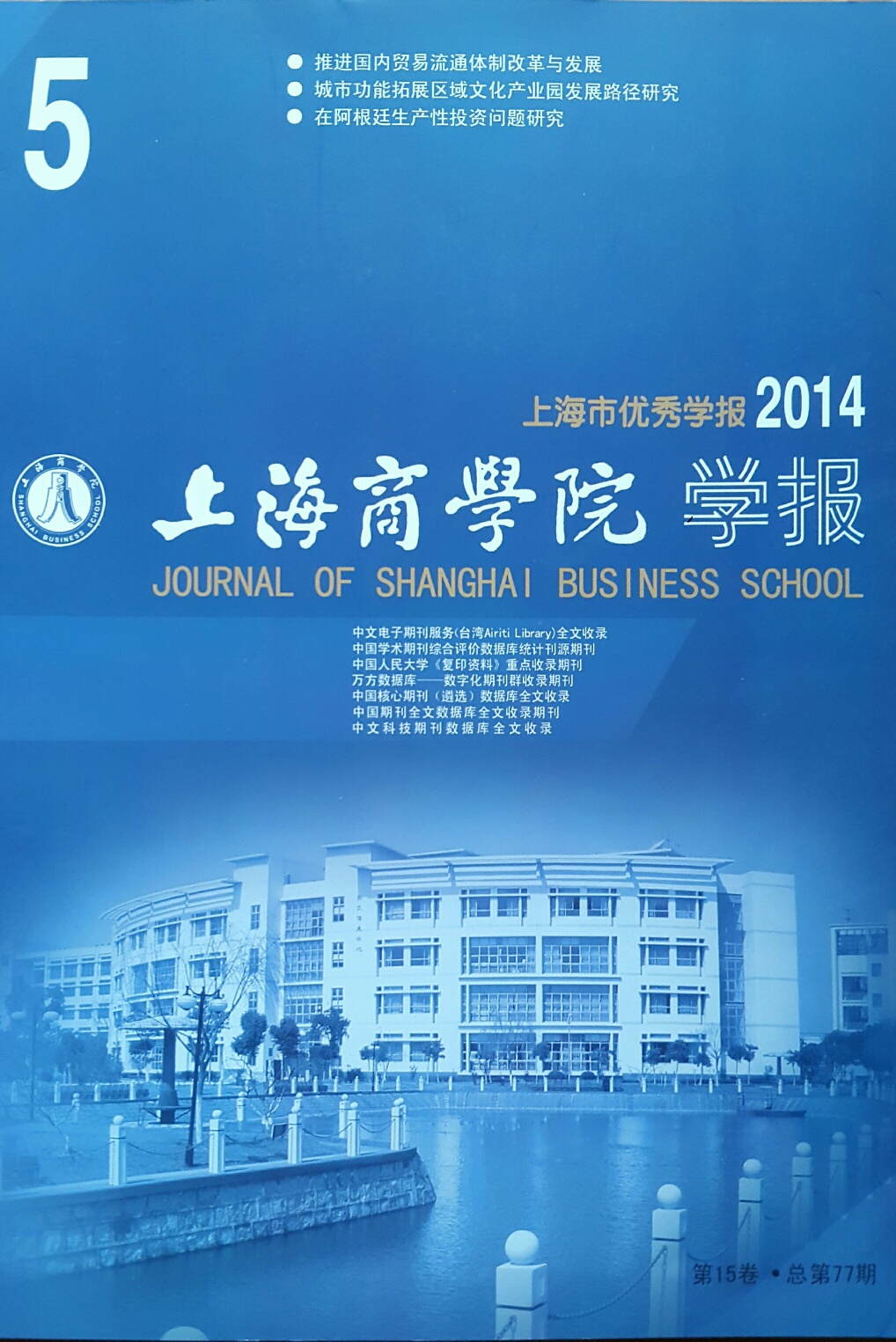
How to Invest in Productive Business to be Developed in Argentina
It's an honor for us to be the first Tax Professors of the University of Buenos Aires to publish an article on the prestigious Journal of the Shanghai Business University in China. This article is the first of a series about how Chinese investors should structure their investments in Argentina in order to achieve a substantial reduction in the impact of taxes. We also explain the different alternatives in organizing a business in Argentina from a legal perspective. Please find attached an electronic version of the published article. It was also an honor for me to contact the authorities of the Shanghai Business University with their colleagues at the University of Buenos Aires. Now both Universities are in the process of reaching a cooperation agreement and I hope this will be a great step in the integration between both countries.
At the time of making a direct productive investment in Argentina, the investor must draw up a detailed project plan that will estimate different hypothetical scenarios in order to measure the return on the invested capital adjusted to risk, while taking into account operational, financial, accounting, legal and tax aspects. The choice of the legal form to structure the investment is essential to achieve the best investment profile in terms of cost and income and to avoid tax or legal inefficiencies that might reduce or compromise the estimated margin of profit. We refer to those predictable elements that are necessary to develop an investment and not those related to the business itself or to the target country where the investment will be made. The tax and legal system provides partnerships, trusts and other companies to make a long term productive business. From the tax viewpoint, the principal differences fall on direct taxes (on income tax, tax on assets or distributed profits) .
Among these partnerships we may highlight the joint ventures (temporary partnerships of businesses) that enable the capital of independent companies to come together without establishing a business organization, and which have a limited liability over the portion that he has contributed. The disadvantage of this partnership is its temporary characteristic that forces parties to make as many contracts as projects they decide to develop. Another advantage is that joint ventures are not subject to income tax (income tax whose rate is 35%) nor personal assets (as tax on alternative minimum income tax whose rate is 1% applicable on business assets and on net wealth tax whose rate is 0,5% applicable on net asset value as of December 31st.), although partners are subject to tax. Furthermore, gains withdrawal will not pay tax on dividends (which is equivalent to 10% of the distributed profits) which would be applied when the partner distributes profits to other partners or shareholders.
Among other fiduciary forms, the Argentine law provides financial and non financial trusts. Financial trusts are those that issue securities (debt bonds or participation or capital certificate) which can be issued by the system of public or private offering. Non financial trusts are those which do not issue securities but the beneficiaries hold a personal participation over a portion of the trust as stated in the trust agreement.
Trusts in general are taxed as income and as dividends, except for those financial trusts whose certificates are issued under the public offering system (in local securities markets). In that case, dividends (participation certificates) as well as their interests are tax exempt (debt certificates).
An advantage of this structure is its versatility as it is not subject to the Business Organization Act (Law 19,550), and it is governed by the autonomy of the will as a source of rights and obligations. A considerable disadvantage of this structure is that a mandatory deposit earning no interest has to be made and it will amount to 30% of the invested sum. This deposit cannot be withdrawn for the period of one year. An exception to this are the financial trusts with certificates issued by public offering.
As for other companies, the legal types available for non-resident investors are the Corporation (Sociedad Anónima –SA), the Private Company Limited by Shares (Sociedad de Responsabilidad Limitada -SRL) and the Branch. The tax system of these companies are very similar as taxes are paid on income, on the alternative minimum income tax, on personal assets and on dividends.
From the company viewpoint, the S.A. has flexibility certificates to sell participation (shares), to increase capital, to issue in the stock exchange or markets, to make transactions of M&A or reorganizations.
The SRL and the Branch are simpler in terms of management but stricter to incorporate partners, increase capital, associate or expand their operations.
The legal form must be determined in terms of the business model and should be aligned to the company structure and the corporate strategy to optimize the fiscal and financial aspects within a legal scheme that economies exploit today to increase the return on investment.
Tax planning is key at the time of organizing an investment in Argentina. It is also crucial to analyze the treaties to avoid double taxation in force between both countries or between Argentina and a third country where a holding or conduit company might be located in order to reduce the tax on dividends, interest, royalties or the provision of services.
At present, China does not have an agreement with Argentina but has made 99 agreements with countries that have agreements with Argentina. ¨ The legal right of a taxpayer to decrease the amount of what otherwise would be his taxes, or altogether avoid them, by means which the law permits, cannot be doubted.¨ (Supreme Court of the United States in the “Gregory v. Helvering” Case, 1935).
当选择在阿根廷进行直接获利投资时,投资者须准备一份详细的项目,评估不同的可能方案,以衡量投资成本,调整风险回报,同时兼顾运营,财务,会计,法律及税务问题。
适当的法律形式作为投资结构是非常关键的,能就其成本与收入达成最有利的投资方案,避免税务或法律层面的不足,而最终导致减少甚至影响预期的利润率。
我们指的是投资发展可预测的因素,而非该领域本身的商业或所投资的目的地国家。
阿根廷法律和税务制度允许合资形式,信托形式及公司形式以进行长期获利的生意。从税务的角度而言,主要的区别在于直接税(所得税,财产税和利润分配)。
合资形式中比较具特色的是短期联合企业(UTEs),其优势是能集结独立公司的资本,无须成立一个商业公司,每个参与者,仅须对参与的部分或阶段负有限责忹。这种结构的缺点就是其短暂性,须依据短期联合企业的项目开发而拟定成许多合同。另一个短暂联合企业的优势就是不需缴纳所得税(所得税税率为35%)及财产税(其最低假定所得税的税率为企业资本的1%及所申报的个人房产税净资产的0.5%),参与者皆享有此待遇。此外,利润分配亦不需缴纳股息税(相当于利润分配的10%),但仅限参与者将利润分配给合伙人或股东时适用。
至于信托形式,阿根廷法律允许金融信托和非金融信托两者。金融信托则为发行有价证劵者,可透过私下或公开形式发行(债务证券或参与证书或资本证)。非金融信托则为不发行有价证劵者,依据信托合同规定,受益人参与个人持有的信托部分。
金融信托一般得缴纳所得税,股息也得缴纳税金。金融信托公开发行制度下(当地的股市)的信托证劵除外,该种情况下之股息(参与证书)和利息免税(债务证券)。
这种结构的优点之一就是它的多功能性,其不受源于权利与义务的自主决策所制订的公司法规范。这种结构最主要的缺点就是需储存为期一年免息不可使用之存款,为总投资额的百分之三十。公开发行的金融信托证券则不在此限。
就企业形式而言,适合非居民投资者选择的类型为股份有限公司(S.A.),责任有限公司(S.R.L.),及设立分公司或者分支机构。这些法律类别的课税制度都非常相似,需缴纳所得税,最低假定所得税和个人房产税及股息税。从企业的角度来看,股份有限公司(S.A.)可弹性出售股份(股票),增资,发行股票或上市,或办理并购或重组。
责任有限公司(S.R.L.)及设立分公司就公司经营而言是较为简单的,但相对地,关于公司增加股东,重组,结合或扩张都较为严格。
法律形式的定义必须从公司的经营模式出发,并调整其企业战略。一旦依据公司的经营战略选择了合适的结构,该结构于合法的范围内,就最佳财政和纳税的角度,选择有利的经济开发方案,以提升投资回报率。
当选择在阿根廷规划投资时,国际税务规划就是最主要的层面。分析协议的网络是绝对必要的,可避免两国现行的双重征税问题及降低位于第三国控股公司或管道公司的股息税或母公司或第三国提供的服务转让税。中国尚未与阿根廷签订协议。但这不会成为一个明智税务规划的障碍,可以善用中国现有的九十九项协议,部分中国与某些国家签订的协议同时也与阿根廷签有协议。
“毋庸置疑地,在法律允许的机制下,纳税人具有降低本应缴纳税金的合法权益,或可直接免缴”(美国最高法院之判决“1935年的Gregory v. Helvering”)。